
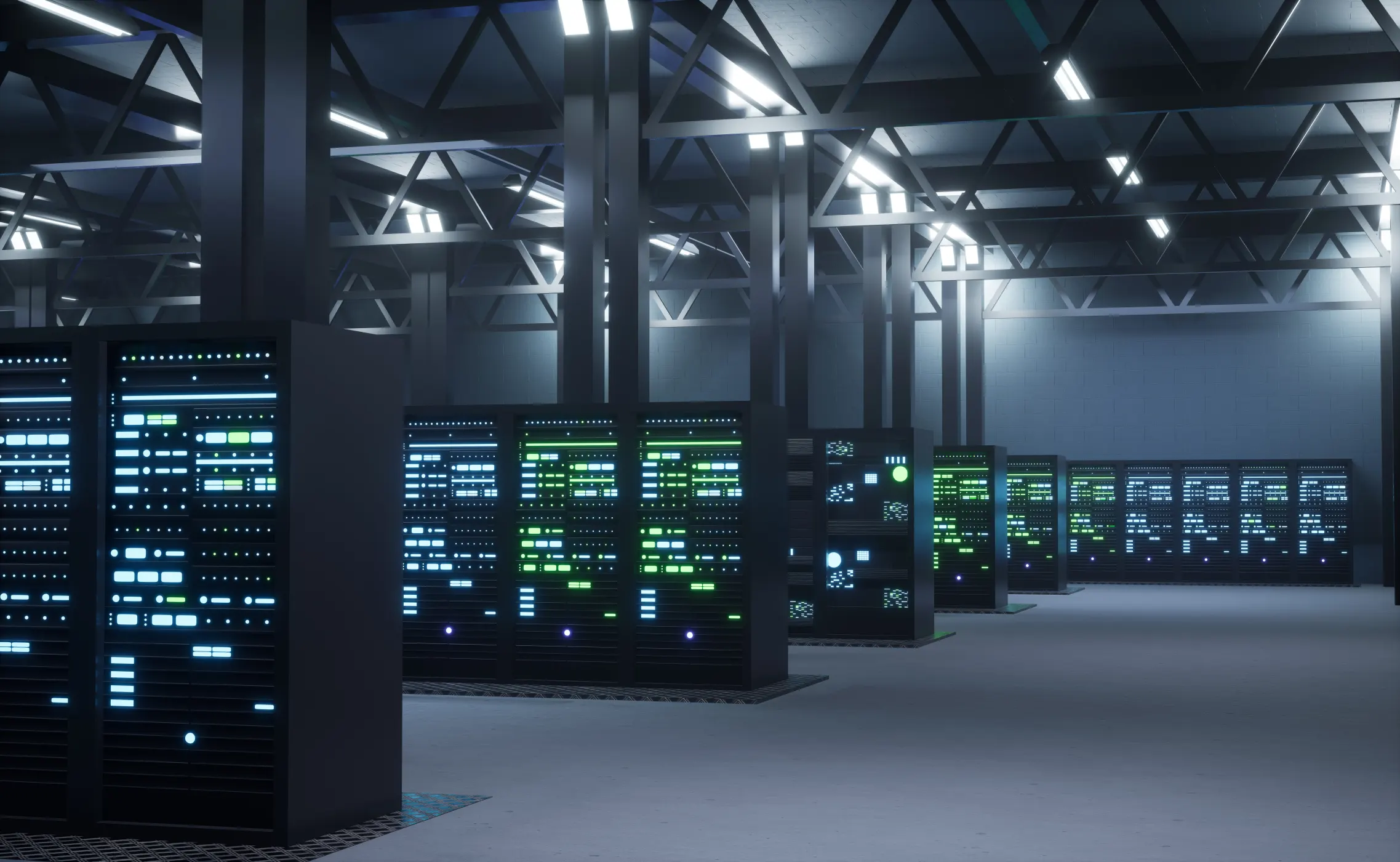
The year that's about to end will go down in the recent history of the cloud sector as the year of major outages. Control Plane, a tracker specializing in infrastructure incidents, has documented 19 major outages on AWS, Microsoft Azure, Google Cloud, and Cloudflare in 2026 alone, with two of them still unresolved after more than eight months. This is a significant issue for any company that has entrusted its entire operations, website, or email to a single hyperscaler.
What exactly has gone wrong with the major suppliers this year?
The 2026 incident tracker includes a wide range of issues. A power and temperature incident on May 7 and 8 affected EC2, EBS, and other services in an Availability Zone in the US-East-1 region, with most of the recovery taking approximately 21 hours and 30 minutes. Meanwhile, Microsoft experienced its longest outage of the year: Azure suffered its largest complete outage on the 2026 incident tracker on May 29 and 30, with over 22 hours of degraded service in the West US 2 region.
Google Cloud was not spared either. A power and cooling failure disrupted services in the Netherlands region on July 15 and 16 for almost 15 hours, and months later another power-related incident in its London region, between October 19 and 20, affected Compute Engine, Google Kubernetes Engine, Cloud Run, Cloud SQL, and other services for about six hours.
Why are some data centers still not recovering?
The most striking case of the year doesn't involve a software bug, but rather actual physical damage. AWS regions in the United Arab Emirates and Bahrain also suffered damage to their physical infrastructure following drone attacks in March, leaving some services disrupted for months. According to the tracker itself, these two incidents were still ongoing as of mid-November, with AWS acknowledging that some data hosted exclusively in those regions may not be recoverable.
This is the most extreme example of something that has been happening for some time: failures are no longer just a matter of code. The major incidents affecting AWS, Azure, Cloudflare, and Google Cloud this year have been due more to limitations in physical infrastructure, cooling, power, and fiber capacity than to purely software defects, in a context of hyperscalers with their capacity stretched to the limit by the demand for AI.
Does this mean we should abandon the public cloud?
No, and it would be a mistake to frame it that way. What 2026 does make clear is that relying on a single region, a single provider, or a single copy of data is playing with fire. A study of the 62 major outages recorded from 2020 to the present is conclusive: half of the outages were not limited to a single region. 31 out of 62 affected more than one region or a provider's global services, so operating in multiple regions with the same provider may not be enough.
In other words: true redundancy is not about having two servers in the same cloud, but about having an independent backup, outside the main provider, and a recovery plan that does not depend on a single hyperscaler coming back online.
What can a Spanish company do to avoid getting stuck?
At AZN Cloud we've been emphasizing the same thing for years: the best insurance policy against these incidents is to have your data replicated in a separate environment from the one hosting your daily operations. Our cloud backup service allows you to schedule automatic local and remote backups, with encryption and point-in-time recovery, so that a multi-hour outage at an external provider doesn't result in data loss or website or online store downtime.
For those who manage their own infrastructure, the alternative is a cloud VPS hosted in data centers in Spain, with dedicated resources, 24x7 support and the possibility of combining hosting, domains and backup under the same trusted provider, without depending exclusively on the American giants that this year have made most of the headlines due to their outages.
As a side note: .com domains are also going up in price.
Aside from the power outages, the other development that shook the sector in November was the price increase for .com domains. VeriSign, the registry operator, implemented a price hike of up to 7% on the wholesale rate for new registrations and renewals, effective November 1st. This adjustment is expected to be repeated in the coming years according to the current agreement. Anyone with projects involving multiple .com domains would be wise to review their renewals before the cost escalates further.
What you should review right now
If your company hosts its website, email, or critical applications with a single cloud provider, now is a good time to ask three simple questions: Where is the actual backup of my data? How long could I go without access to that provider? And do I have a backup plan that doesn't rely on the same infrastructure that has failed? The answers often cost less than they seem.